

By Christine Fryatt, RN, FMP-BC
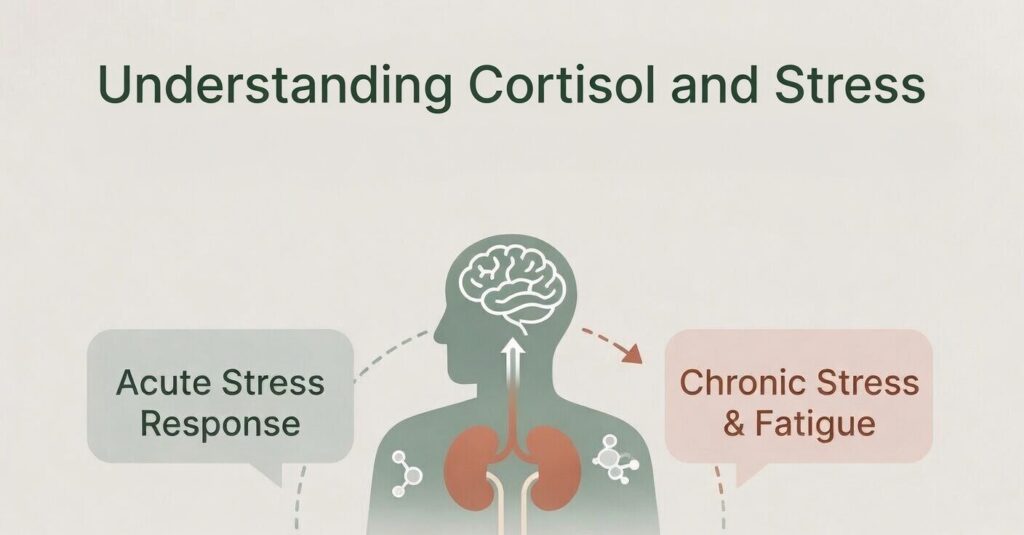
Most people have heard about “stress” and how it makes us feel. But it’s also important to know how stress affects our bodies.
When we have stress for a long time, it can make us feel worried, tired, and like things are just too much. Some people can handle a lot of stress, but others feel it right away. One reason for this is a hormone called cortisol.
What Is Cortisol?
Cortisol is sometimes called the main “stress hormone” in our bodies. The adrenal glands, which are small glands on top of your kidneys, make cortisol. Normally, cortisol is higher in the morning to help you wake up and feel awake. It gets lower during the day so your body can relax and rest at night.
When something stressful happens, your cortisol goes up to help your body deal with it. Cortisol gives you more energy and helps you focus. It also slows down things your body doesn’t need right then, like digestion. This is helpful and can even save your life if the stress doesn’t last long.
What Happens With Chronic Stress?
The problem happens when stress doesn’t go away. If you feel pressure from things like work, taking care of someone, money problems, or other life issues, your cortisol stays high for too long instead of going up and down like it should.
If your cortisol is high for a long time, it can cause:
- Sleep problems — difficulty falling asleep or waking up feeling unrested
- Fatigue — feeling tired even after a full night’s sleep
- Brain fog — trouble concentrating or remembering things
- Mood changes — increased anxiety, irritability, or low mood
- Blood sugar swings — feeling shaky, irritable, or foggy between meals
- Weakened immunity — getting sick more often or taking longer to recover.
- Digestive issues — stomach upset, bloating, or appetite changes
These problems don’t mean something is “wrong” with you. It’s just your body’s way of telling you that you have been under stress for too long and need more time to rest and recover.
What Can You Do About It?
The good news is that you can help your cortisol and stress by making small, steady changes. You don’t need to change everything at once. Little steps over time can really help.
Try to get good sleep. Going to bed and waking up at about the same time every day helps your body’s cortisol stay on track.
Eat regular meals. Skipping meals or eating lots of caffeine and sugar can make your cortisol levels go up and down. Eating balanced meals with protein, fiber, and healthy fats helps keep your energy steady.
Move your body in gentle ways. Walking, stretching, and light exercise can help lower stress. Sometimes, really hard exercise can add more stress, so pay attention to how you feel after being active.
Try calming activities. Slow breathing, spending time outside, and quiet moments can help your body relax and lower your cortisol.
Talk to your doctor or nurse if stress is making your daily life, sleep, or health worse. They can help you figure out what’s going on and talk about ways to help you feel better.
A Final Note
Stress is a normal part of life, but you don’t have to handle it all by yourself. Learning what happens in your body is the first step to making things better. Small changes, like good sleep, regular meals, gentle movement, and adding calm moments to your day, can really help your body feel better.
This information is for learning only. It is not medical advice. Talk to your doctor about any symptoms or questions you have about your health.
Christine Fryatt is a registered nurse and board-certified functional medicine practitioner (FMP-BC) with 20+ years of clinical experience in population health, case management, behavioral health, and integrative wellness. Find more at christinefryattrn.com.

Leave a Reply