

By Christine Fryatt, RN, FMP-BC
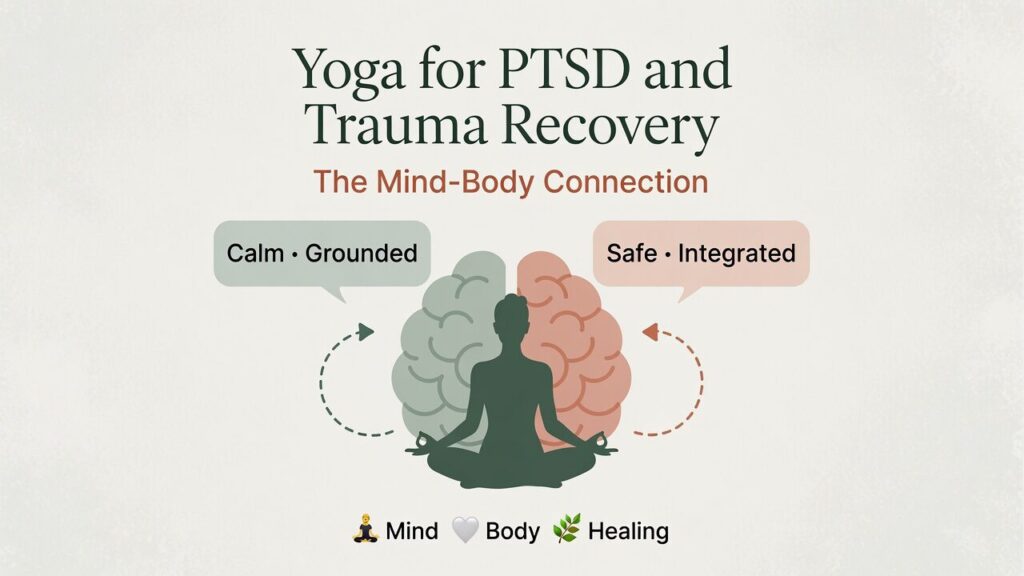
Post-traumatic stress disorder (PTSD) is a condition that affects not only the brain but also the entire nervous system. People diagnosed with PTSD often report feeling disconnected from their bodies, remaining on high alert, and being unable to relax even in a safe environment. Customary approaches to PTSD, such as medication and therapy, can provide meaningful relief, but many people continue to experience symptoms and a persistent sense of unease. Complementary approaches like yoga offer a gentle, accessible way to support healing alongside conventional treatment. According to the National Center for Complementary and Integrative Health (2022), mind-body practices such as yoga can help regulate stress responses and promote overall well-being. Trauma-informed yoga, in particular, offers survivors a safe option for rebuilding a sense of safety, connection, and control within their own bodies.
How Trauma Affects the Nervous System
Trauma affects the body at a cellular level, influencing heart rate, hormone balance, and even body temperature. When someone experiences stress that feels overpowering or chronic, their nervous system can become stuck in fight-or-flight mode, leading to hypervigilance, muscle tension, insomnia, and difficulty regulating emotions. Van der Kolk (2014) describes how trauma becomes stored in the body, affecting physical and emotional responses long after the traumatic event has passed. Specific practices such as breathwork and gentle movement can help interrupt this cycle. NCCIH (2022) notes that yoga may reduce stress hormones and support autonomic nervous system balance, which is especially valuable for individuals living with PTSD.
Why Yoga Supports Trauma Recovery
Yoga supports trauma recovery by helping a person reconnect with their body in a safe, intentional way. Slow, mindful movement helps the practitioner feel grounded and present in the moment. Deep breathing during yoga activates the parasympathetic nervous system — the body’s “rest and restore” mode. Research from the Trauma Center Trauma-Sensitive Yoga (TCTSY) program shows that trauma-informed yoga can reduce PTSD symptoms by offering choice, empowerment, and body awareness (Trauma Center Trauma-Sensitive Yoga, n.d.). For people exploring this path, it’s worth seeking out a trauma-sensitive yoga class or instructor that allows a person to move at their own pace and focus on the experience rather than perfecting a pose.
What Trauma-Sensitive Yoga Looks Like
Trauma-sensitive yoga is designed to support a person’s emotional, spiritual, and physical safety. Instructors offer options and alternative ways to approach each pose, allowing the practitioner to choose what feels right for their body in the moment. This removes the pressure to perform or look a certain way, and instead invites attention to sensation, breath, and intention. This matters deeply for trauma survivors, who may have experienced a loss of control or had it taken from them. TCTSY research shows that this empowerment-based approach can significantly reduce PTSD symptoms plus improve emotional regulation (Trauma Center Trauma-Sensitive Yoga, n.d.).
Gentle Ways to Begin a Yoga Practice
When considering yoga as part of a healing journey, starting gently is key. Short, consistent practices are often more effective than long or intense sessions. Beginners may benefit from slow-flow, restorative, or trauma-informed classes that highlight safety and grounding over performance. Simple techniques such as feeling the feet on the floor, lengthening the exhale, or placing a hand over the heart can help regulate the nervous system and produce a sense of stability. Harvard Health Publishing (2021) notes that brief, mindful movement practices can improve mood and reduce stress.
A Compassionate Route To Healing
Yoga alone is not a cure for PTSD, but it can be a powerful complement to therapy and other treatments. It offers a way to reconnect with the body, calm the nervous system, and build a sense of safety, thus equipping trauma survivors with tools they can carry through daily life. Healing is rarely linear, and it doesn’t require perfection, only a willingness to take small, gentle steps forward. With time and encouragement, many people find that yoga becomes more than a practice. It becomes a pathway back to themselves.
References
Harvard Health Publishing. (2021). Yoga for better mental health. Harvard Medical School. https://www.health.harvard.edu
National Center for Complementary and Integrative Health. (2022). Yoga: What you need to know. U.S. Department of Health & Human Services. https://www.nccih.nih.gov
Trauma Center Trauma-Sensitive Yoga. (n.d.). Research and evidence-based. Center for Trauma and Embodiment at JRI. https://www.traumasensitiveyoga.com
Van der Kolk, B. A. (2014). The body keeps the score: Brain, mind, and body in the healing of trauma. Viking.
Christine Fryatt is a registered nurse and board-certified functional medicine practitioner (FMP-BC) with 20+ years of clinical experience in population health, case management, behavioral health, and integrative wellness. She writes evidence-based health content for people who want real answers, not just reassurance. Find more at christinefryattrn.com.
Leave a Reply